We’re excited to share a new VitalPBX update, bringing improvements across AI-powered features, system security, monitoring, provisioning, and overall reliability.
This release focuses on making VitalPBX smarter, easier to manage, and more dependable in everyday operations.
Here’s what’s new!
 Smarter AI, Better Call Insights
We’re continuing to expand VitalPBX’s AI capabilities, helping you get more value from every conversation.
AI-Powered Call Insights
The CDR Portal now supports call transcription and AI-generated sentiment summaries, making it easier to review conversations and understand caller interactions without listening to every recording.
More Context-Aware AI Phone Agents
AI Phone Agents can now recognize the dialed number (DID), allowing them to deliver personalized greetings for different brands or businesses. Caller information is also preserved when transferring calls to agents or queues.
Expanded Speech Recognition
VoiceHub and AI Tools now support the gpt-transcribe speech-to-text engine, which is also the new default for VoiceHub transcription.
We’ve also migrated AI Assistants to OpenAI’s Responses API for continued compatibility and improved handling of multi-turn conversations.
 Stronger Security, Less Disruption
Security improvements are a major part of this release.
-
Better protection against SIP floods: UDP traffic from banned IP addresses is now blocked before it can reach Asterisk, including traffic associated with existing connection tracking states.
-
Automatic protection for custom ports: Intrusion protection now follows the SIP, HTTP, and WebRTC ports configured through the GUI.
-
Improved client IP detection: WebRTC and web phone connections behind reverse proxies can now report the actual public client IP address.
These changes help strengthen system protection while keeping telephony services running smoothly.
 Better Monitoring and Visibility
We’ve made it easier to monitor connected devices and troubleshoot potential network issues.
PJSIP Endpoint Monitoring
The PJSIP Endpoints report now includes color-coded RTT indicators, helping administrators identify latency issues at a glance.
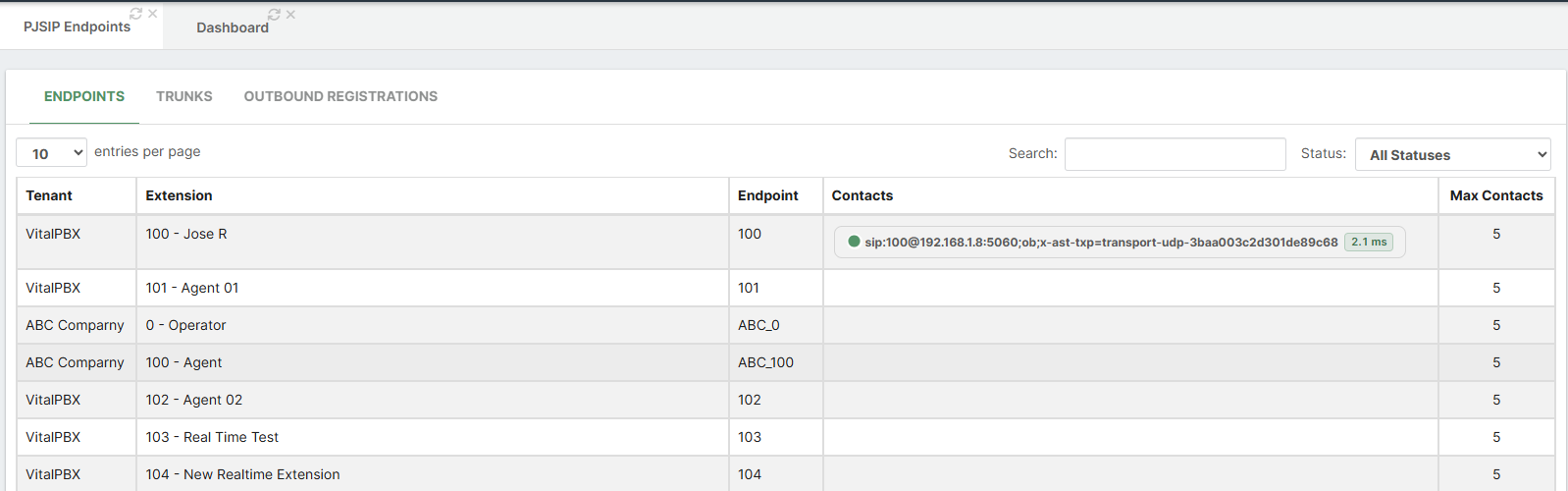
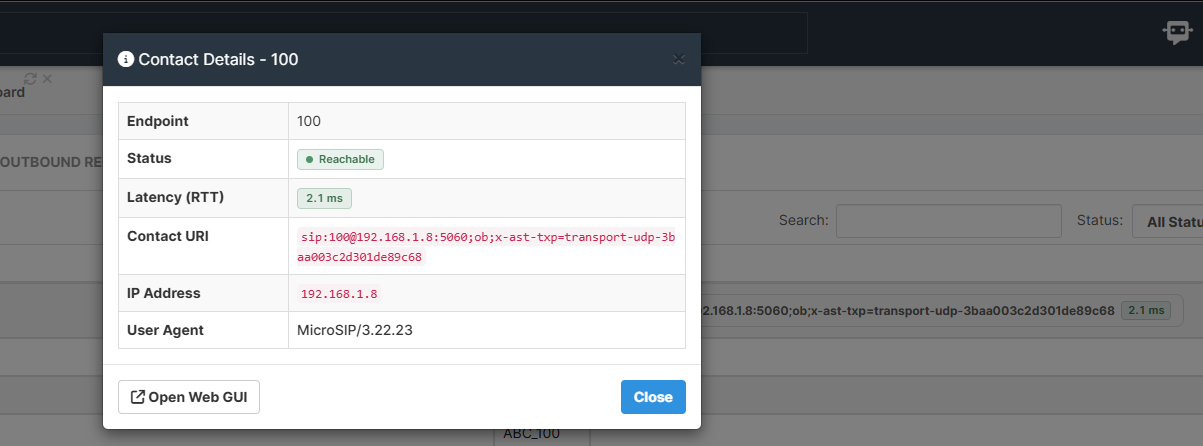
Clicking a status badge opens a device details window with live RTT, remote IP address, User Agent, and a link to the device’s web interface when available on a local network.
Sonata Switchboard Improvements
Queue monitoring is now more responsive, with improved handling of disconnected callers, queue positions, and agent call status across multiple queues.
 More Devices, Easier Provisioning
We’ve expanded device compatibility to make deployment and management easier.
-
Yealink T85W expansion module
-
VTech CTM-S2212 hospitality phone
-
More than 15 additional Intelbras IP phone models across the TIP and V-series
 Performance, Stability, and Reliability
This update also includes several improvements behind the scenes:
-
Updated Asterisk to 20.22.0.
-
Optimized event processing between Asterisk and the VitalPBX GUI to reduce resource usage.
-
Improved handling of call recording folders in multi-tenant environments using network-mounted storage.
 Explore the Full Changelog
Want to see everything included in this update?
